

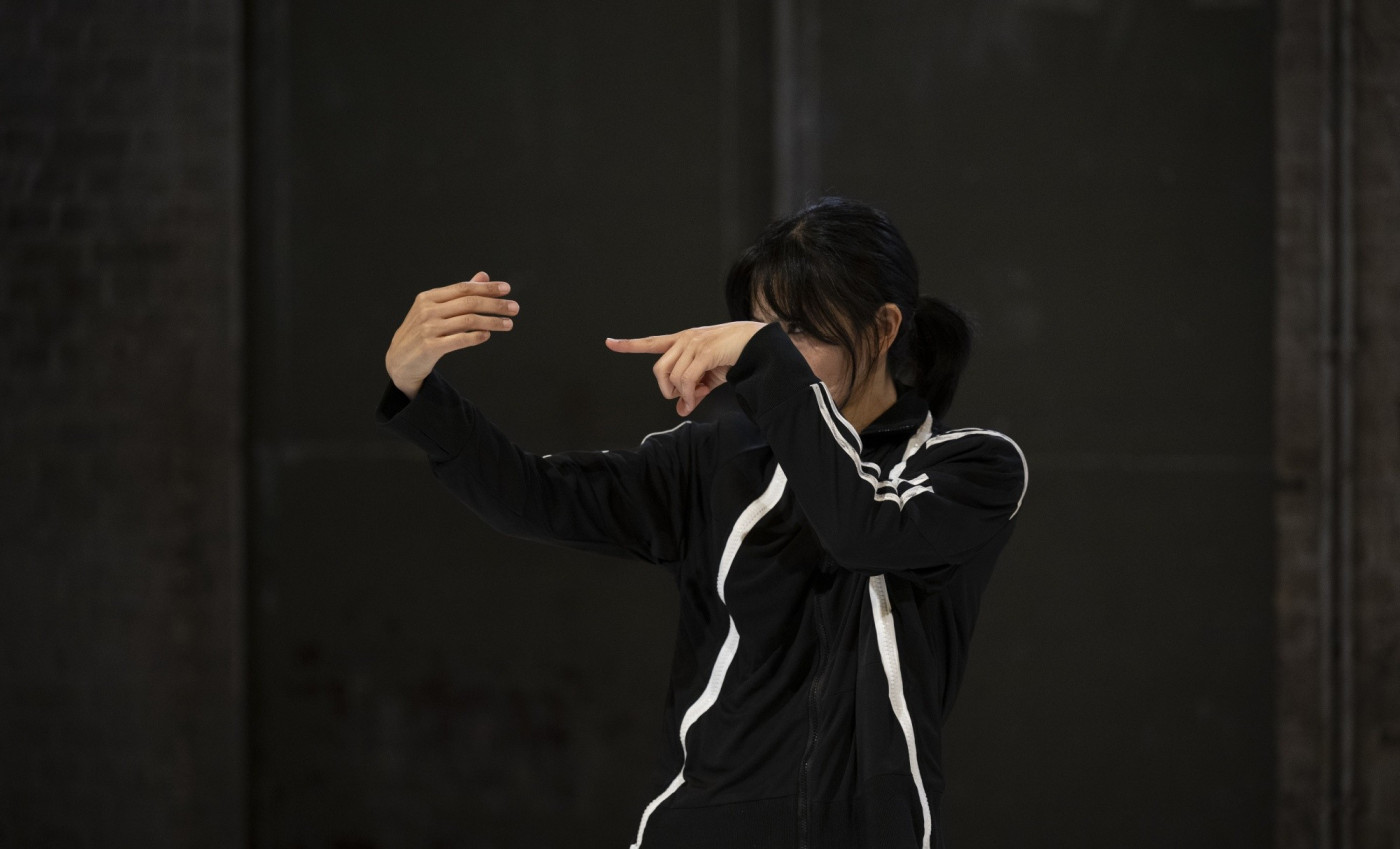
Anorak Variations, or Why Music and Dance Need Relationship-Building
An introduction to the Soundance Festival Berlin: a conversation with Astrid Kaminski and Jenny Haack
English editorial translation using Deepl; Original text in German by Astrid Kaminski
Music and dance have always been inextricably linked. In some ancient cultures, they were even embodied by one and the same person. Since modern times, however, they have developed a sort of hierarchy amongst themselves as independent arts. Ballet performances are a prime example of this. Broadly speaking, they still tend to operate today under the motto ‘music on, dance off’. In contemporary dance, things are different, though this form too has certainly had to emancipate itself from music. For instance, the postmodern choreographer Trisha Brown said at the start of her career in the 1970s that she did not want to be dictated to by music and therefore worked extensively with silence. Today, however, the hierarchical struggles have been resolved, and genuine encounters between dance and music can once again take place. These encounters occur in virtually every dance performance, but they are by no means always addressed as such.
The Soundance Festival has been filling this gap for 10 years now. To this end, as Jenny Haack puts it, “only artists who bring their own artistic vision to their work are invited, so that collaborations and relationship-building can take place on an equal footing”. The aim is to explore two artistic positions, rather than having just one position dictate the framework of the relationship. “The focus is on the encounter in the here and now. The artistic technique of improvisation also plays a major role here” – though this does not mean, of course, that these are merely spur-of-the-moment ideas. Rather, a theme, an interest, a line of research, a structure, etc. is defined, material is developed around it, and improvisation can then take place within these parameters.
In this case, the nature of the improvisation is less a product of postmodern dance (which is known for having developed important new improvisation techniques) and more a result of the encounter between the contemporary free dance scene and Berlin’s real-time music scene. Real-time music is a movement that developed in 1990s Berlin amidst the typical back-courtyard club atmosphere. In contemporary music, the potential of improvisation had remained largely untapped until then. Improvisation was generally something associated with jazz within the music scene. As professional musicians became interested in no longer playing from a score but in composing in the moment, a new energy emerged that also inspired contemporary dancers (and vice versa¹).
Among them, of course, is Jenny Haack, who spent, amongst other things, “many evenings at the now defunct ‘Anorak’ on Dunckerstraße and at other off-the-beaten-track venues in the independent dance and music scene” in Prenzlauer Berg. In every edition of the festival, she therefore endeavours to include at least one work that ties in with this hotbed of creativity. This year, it is ‘It’s Possible’ by Christine Bonansea, who founded her own festival for music and dance in San Francisco, and Axel Dörner, a veteran of real-time music. Furthermore, Jenny promises to “create a truly wide variety of encounters between music and dance, a broad spectrum” over the four festival evenings. (In music, incidentally, a sound spectrum is created by those sounds that one does not consciously hear, but whose composition ensures that a tone is a tone. Perhaps similar to muscle tone in dance.)
¹An example: a gesture – such as that created when a violinist places the bow to the strings – can be taken up by the dancer and lead to a movement sequence of her own, which in turn is continued by the musician in melodic or rhythmic variations; these, in turn, are taken up, blocked or varied by the dancer, and so on. Every detail of the encounter can thus, when viewed through the magnifying glass of interest, become a new artistic method.
Jenny Haack studied dance in Freiburg and fine art in Braunschweig, but over the course of her career has become increasingly interested in the inseparable pairing of dance and music – or, rather, dance and sound. She moved to Berlin in the 1990s and has stayed there ever since. In 2017, she founded the soundance festival berlin, which has been staged annually at DOCK ART ever since.