

Maximal celebration
“Comfort Zone” by Tomi Paasonen and Colin Comfort as themselves in a myth-cum-reality show to light up the tunnel of loneliness
By Louise Trueheart
Lonely Tomi mopes about the stage, seemingly frustrated. He dances tight steps forward and back, following some energy as it roams, trapped, within his body. He periodically gives up on this inner rummaging to whip a sequined heart around, sometimes letting its long umbilical tail wind dangerously around his neck. He is dejected.
Colin appears from the corner. They approach each other, flirty and hesitant, sneaking sniffs of one another’s deepest crevasses, until they come together for a dance in unison. The audience whoops. After a while, they arrive at what I took to be a danced abstraction of a sex scene, which required a weight-sharing, leg interlocking, communal rowboat-like position. It is intimate and sweet. This is dance as storytelling, and the story is of how two people managed to find each other despite the horrors of Grindr and the loneliness epidemic. Tomi says, that he didn’t think he would end up with anyone and had “pretty much given up on it until I met Colin.”
Panting these words, they open up a second phase of the work, turning to text in order to reflect on the healing they have managed to do within their relationship. They are casual, personal, drawing the audience in close. They share anecdotes about blissful places, parents, childhood games, and important figures (for Tomi, a fly who tickled his pubescent body, and for Colin, some aunties who printed out all 17 stanzas of American Pie to sing together at the kitchen table).
It’s Colin’s first time in a contemporary dance performance. Usually, he performs as a drag queen called Gieza Poke, who has been going strong in the drag scene for a decade. It was moving when Colin introduced himself by name, “Hi, my name is Colin Comfort, and I don’t get to say that on stage very often.” He loves his drag persona – it is a theme in the work – but he can’t help but notice that Gieza can be a shell to hide behind.
Tomi used to dance for the Hamburg Ballet and, since the injury that caused his departure from that world, he has had a prolific decades-long career in contemporary dance. Their shared yet different relationship to the stage brings the work to straddle their two genres: a dance show and a drag show. “Comfort Zone” reveals itself to be a cheeky misnomer, since in a way, neither Colin nor Tomi claim this zone as one they know well. It’s healing though, the way we can all spend time here at the borderline without needing to know what, exactly, the piece is. One group of audience members brought in an entire bottle of wine with glasses from the bar to enjoy from their seats. A group in the back is chatty, talking back, laughing, cooing and snapping to various jokes and vamps. Other people stay quiet, observe the movement and dramaturgy, content to be sitting empty handed in the dark.
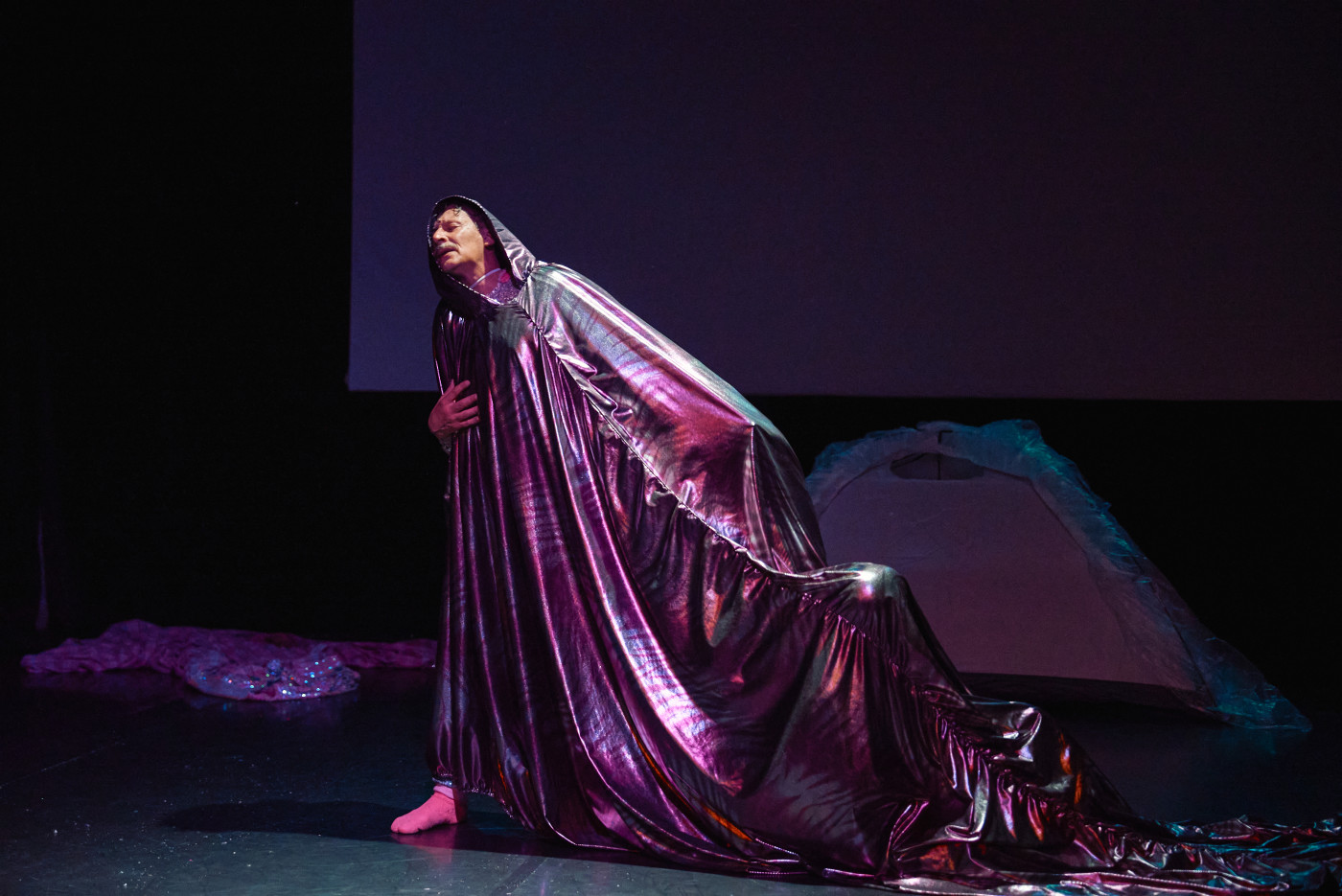
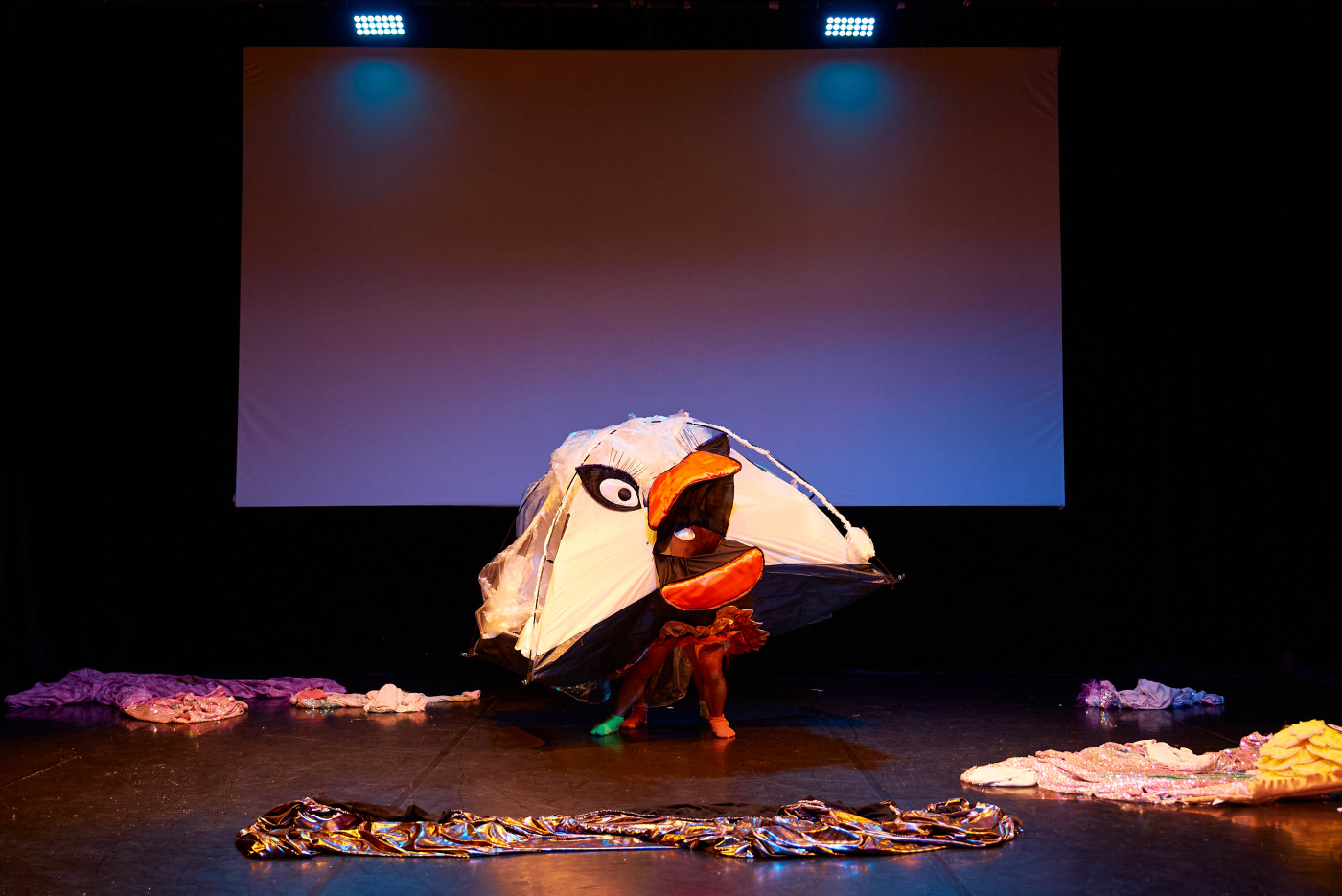
Did I mention that the whole time, they are costumed in sequined sweat suits, with bearish ears sewn into the hoods? I wasn’t sure what the costumes were about, noting only how they seemed cute and cuddly and added a layer or bejeweled fantasy. It became clear that Colin is also a costume designer when the work crescendoed into an explosion of costume reveals, each one more mind-blowing than the next. They called women into the room who were not there – someone Tomi used to dance ballet with appeared wearing a tent as a skirt and plastic sheets for tulle and wings. Aunties popped out, breasts a-jiggle. The tent gets flipped around to become the final character, replete with mouth for lip-synching, uvula, and a frilly vulva below.
They sing the iconic Jackie de Shannon song, “What the world needs now is” – the sound cuts out – “how about taxing the billionaires??” the song continues to drop out the crucial word, love, which they replace with things more concrete, like more cultural funding. This joke, and seemingly political spin, lands, and the audience loves it. I did wonder why this material stayed in, however, since their love story and shared energy is the driving force of this work. Of course gay love, queer love, is political, and of course we should tax the rich, but this part came out of nowhere. It felt like it was supposed to signal a set of political beliefs, but that the work hadn’t gone into integrating those beliefs.
Drag and dance, and all art, arguably, are great at mythologizing. These two artists seem to have joined their practices in service to this task: the mythologization, albeit in a lighthearted way, of their love and life together. The closing video is a montage of phone recordings they’ve taken of each other over the years. In the videos, they are dancing, running around, kissing, laughing, hugging, or somehow in the throes of high energy. Myth-cum-reality, they celebrated their love to the max.
Louise Trueheart is a writer, performer, and dramaturg. Currently, she writes about prostration, crying, and the figure of the lamb. She has been active in Berlin's performance scene since 2013.
By playing this video, you accept Vimeo´s privacy policy. Read more in our privacy policy and at https://vimeo.com/privacy.